

Auction 19th/ 20th Century Sculpture
» reset


Your personal art agent

You are interested in works by Ernst Gustav Herter?
We are happy to inform you, if works by Ernst Gustav Herter are to be auctioned in one of our upcoming auctions.
Please accept our privacy policy

529
Ernst Gustav Herter,
1846 Berlin – 1917 Charlottenburg
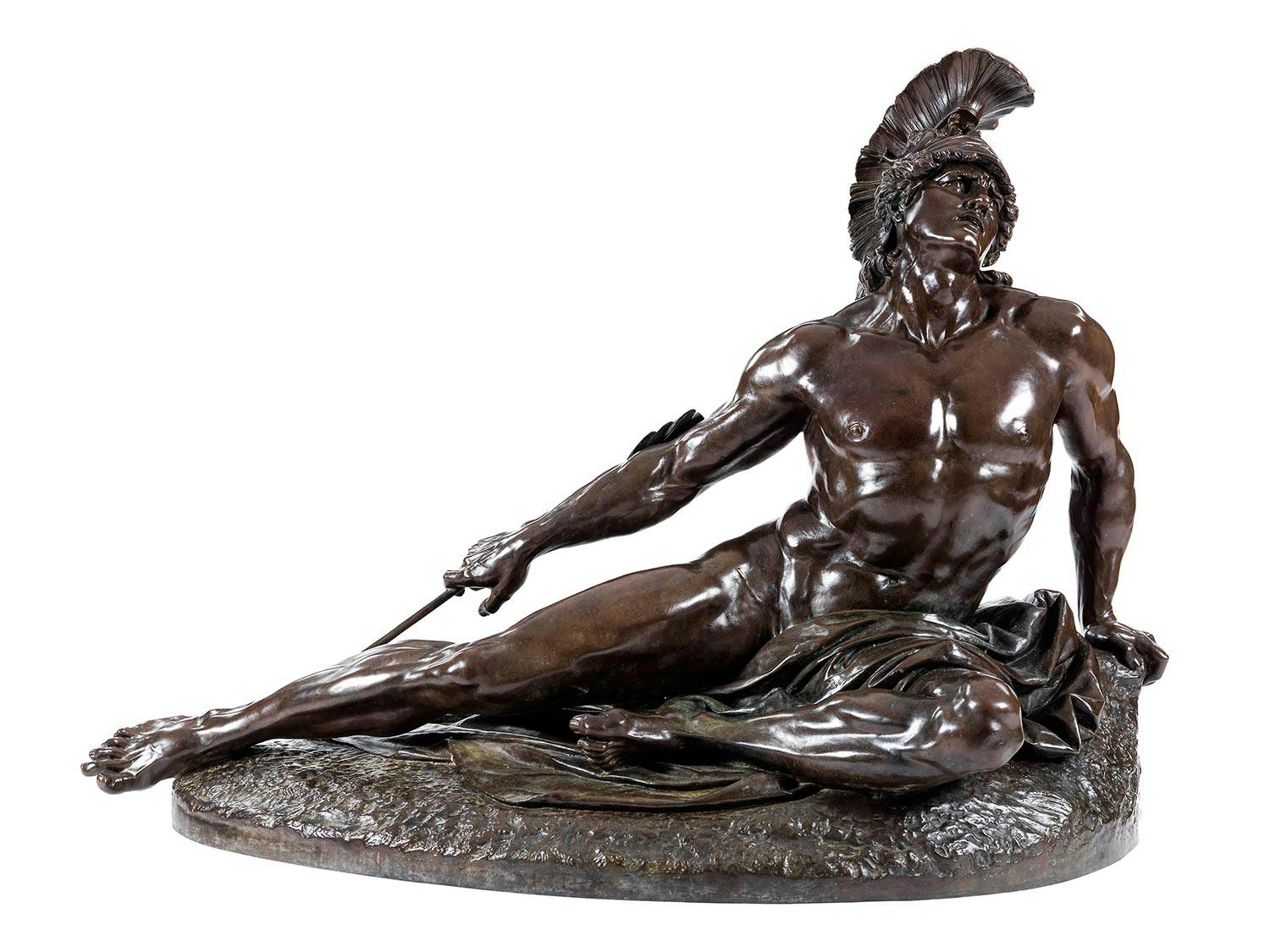
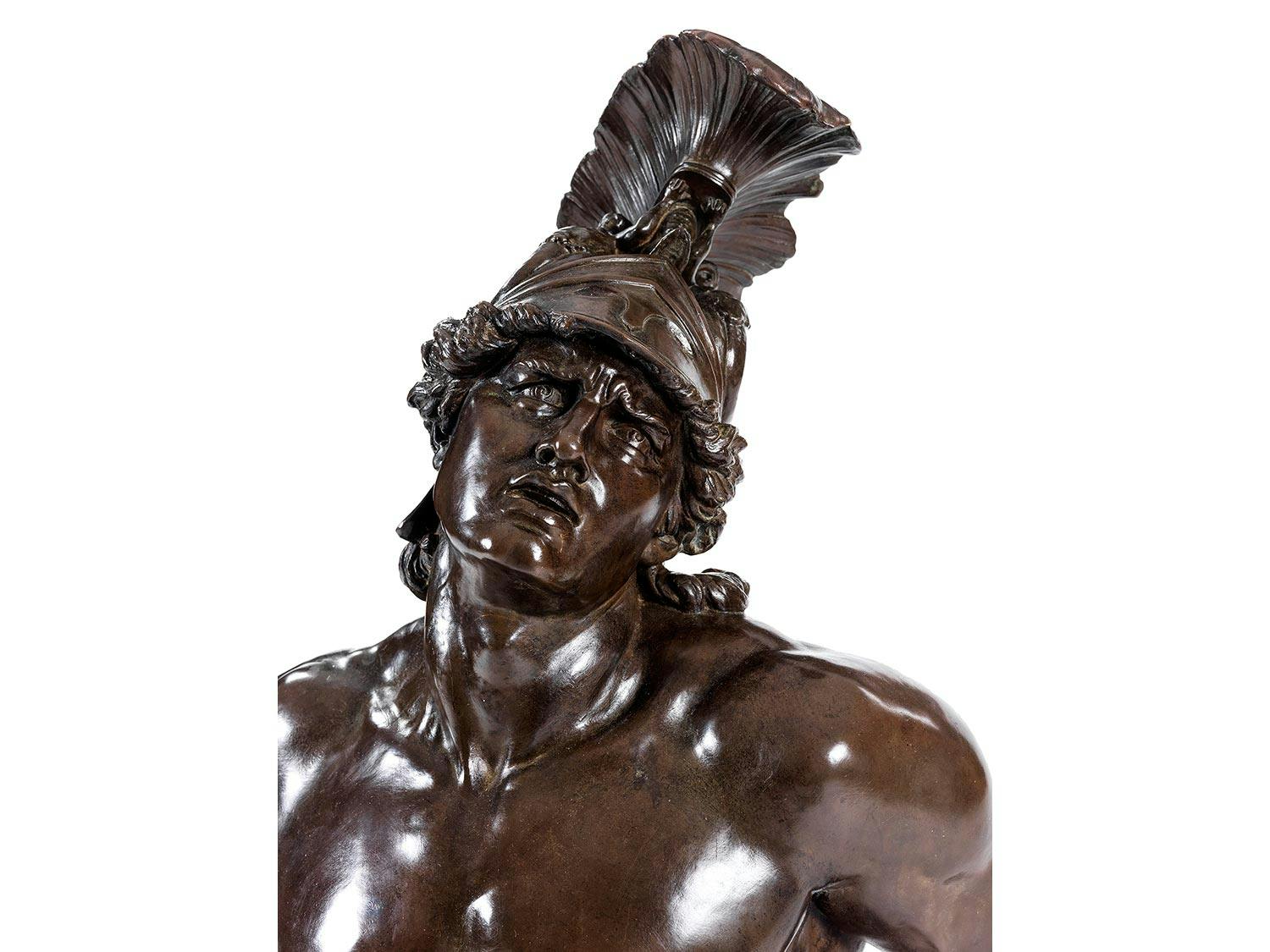
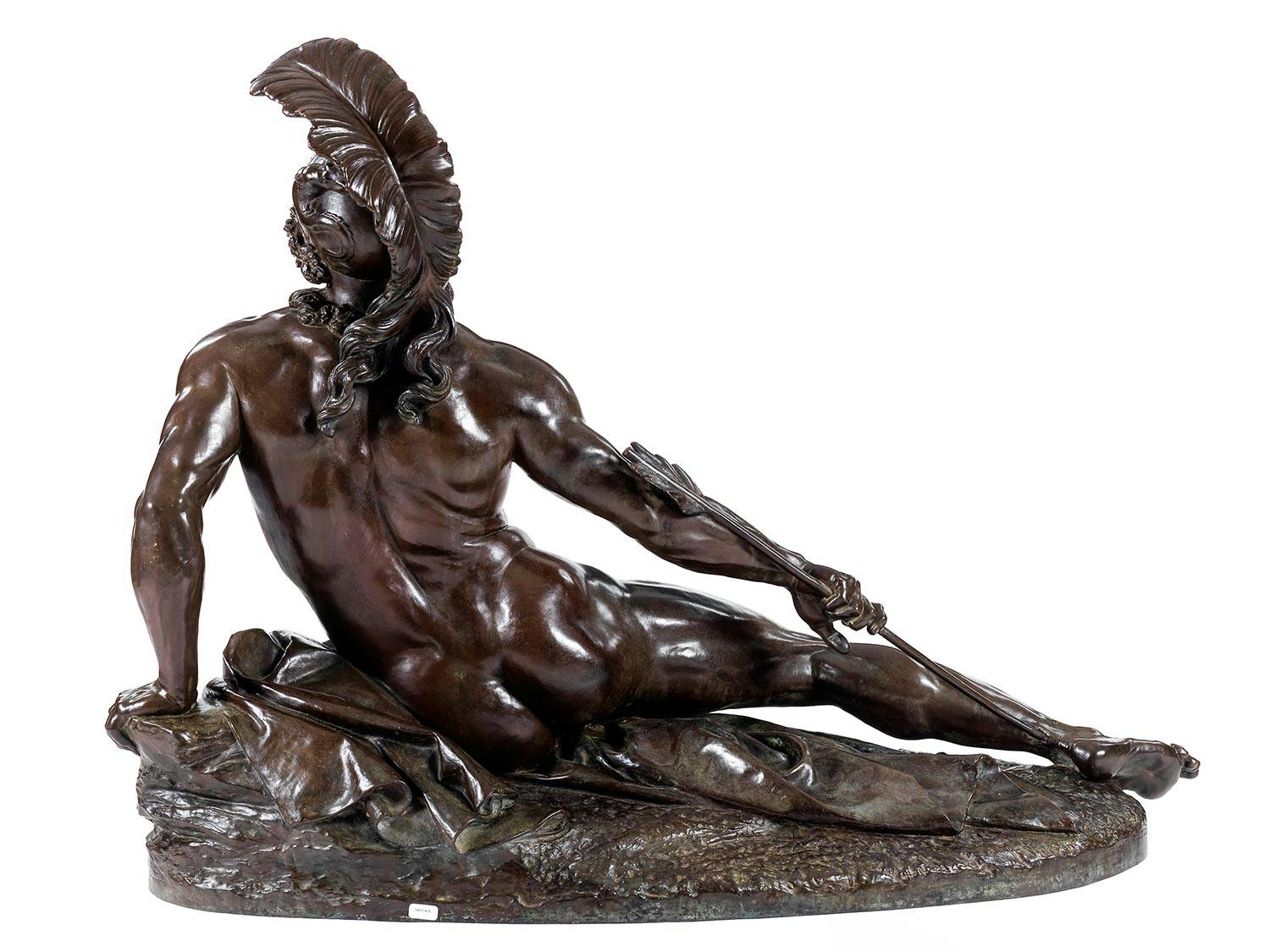
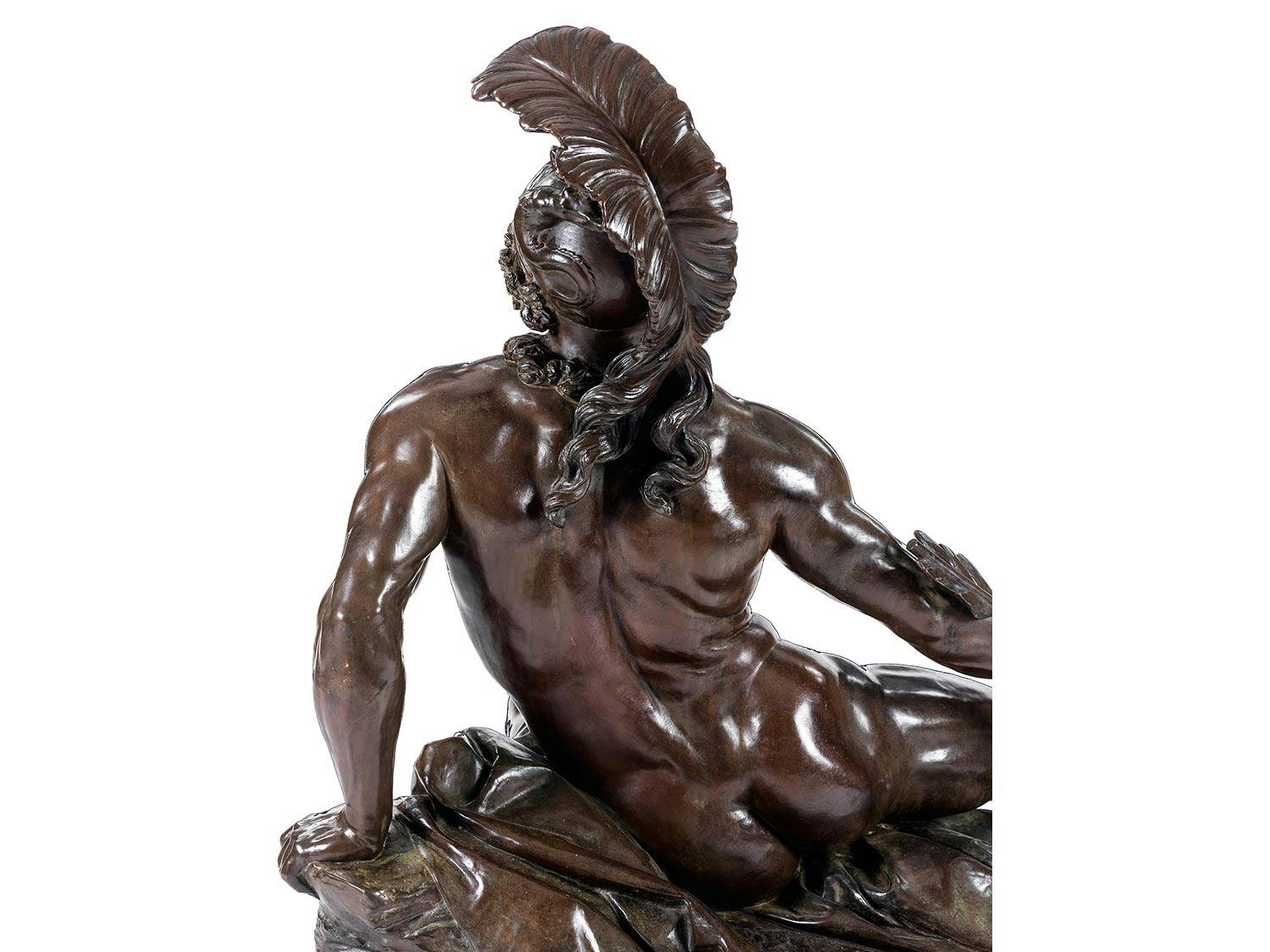
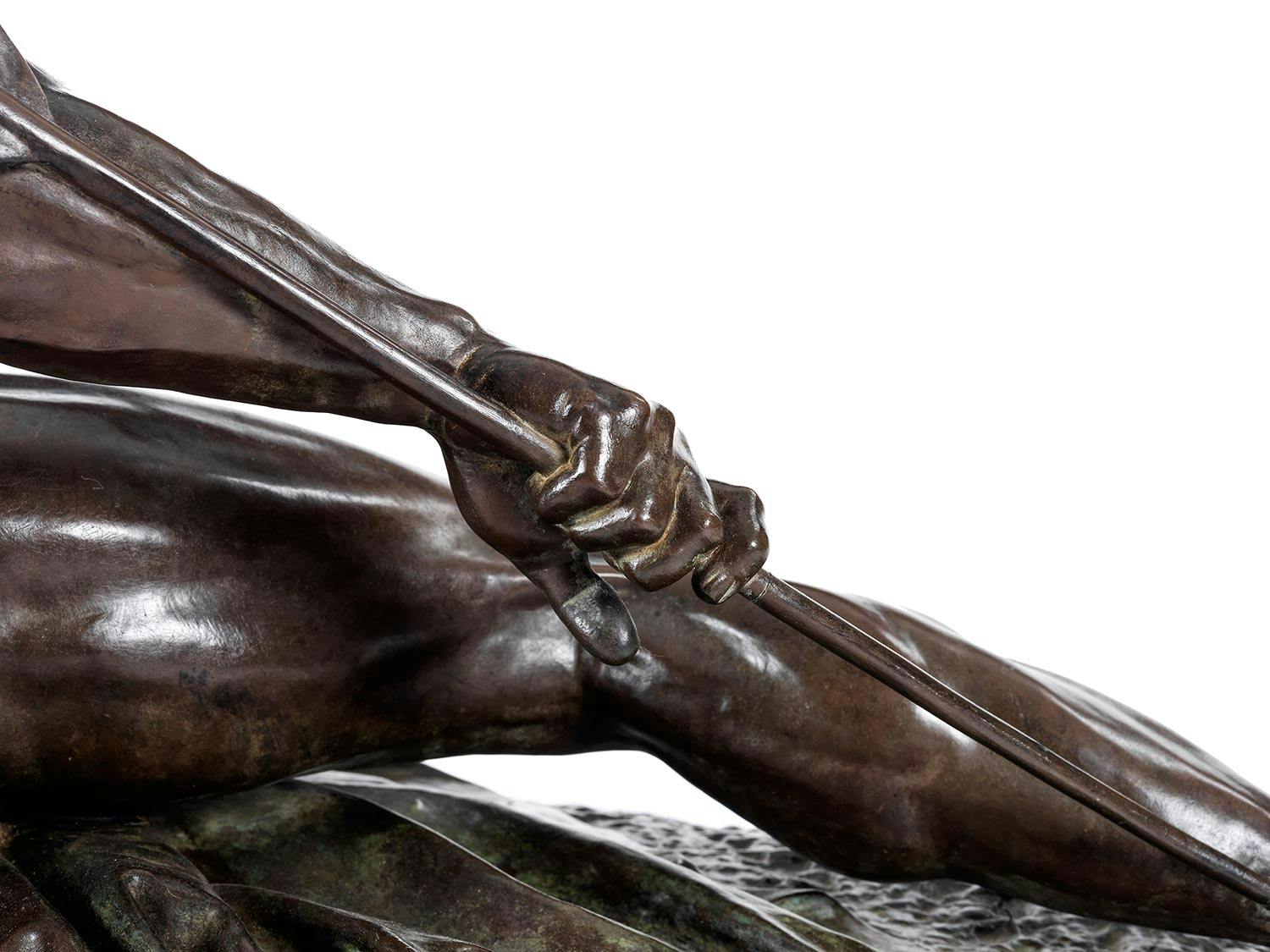
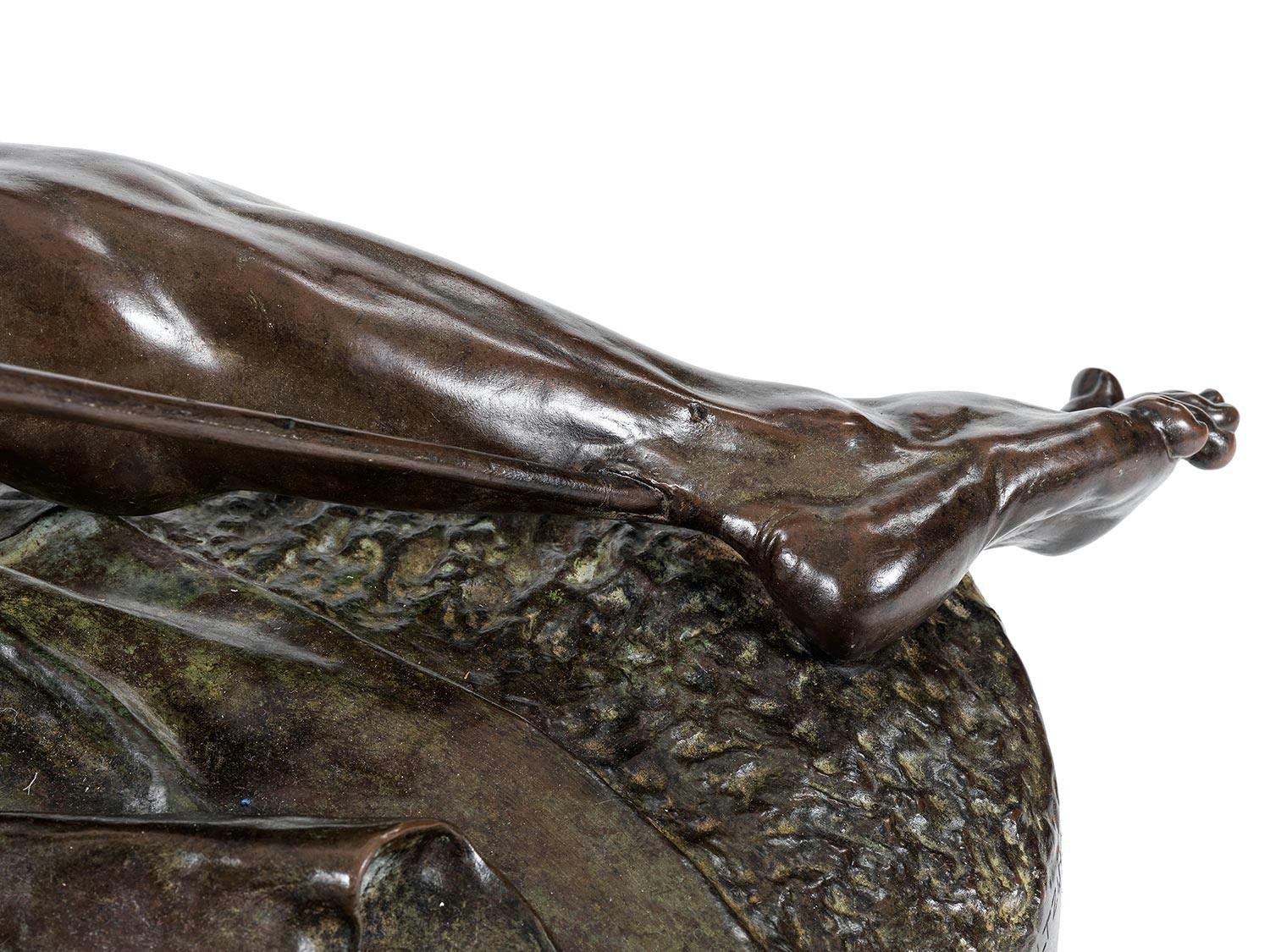
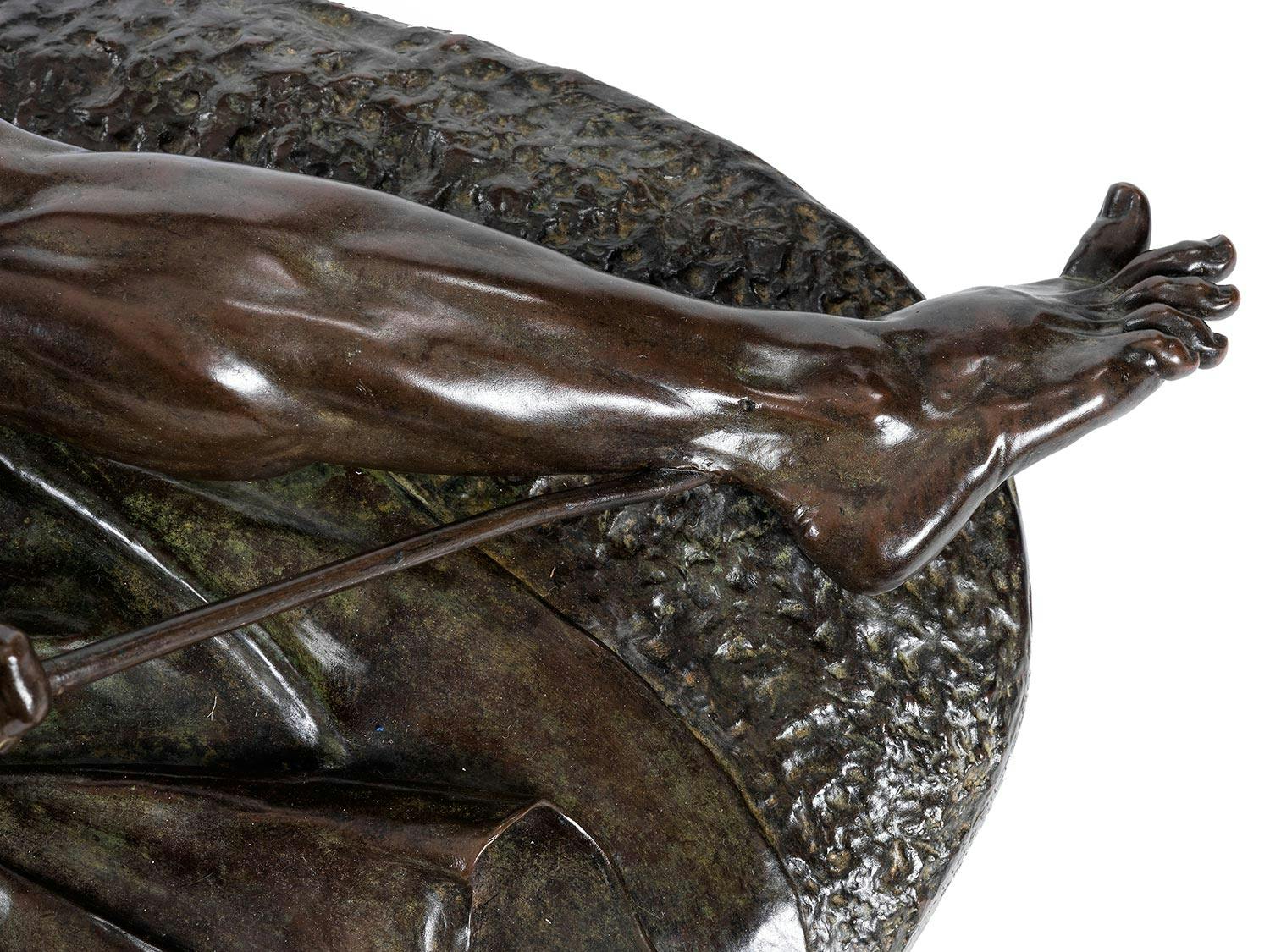
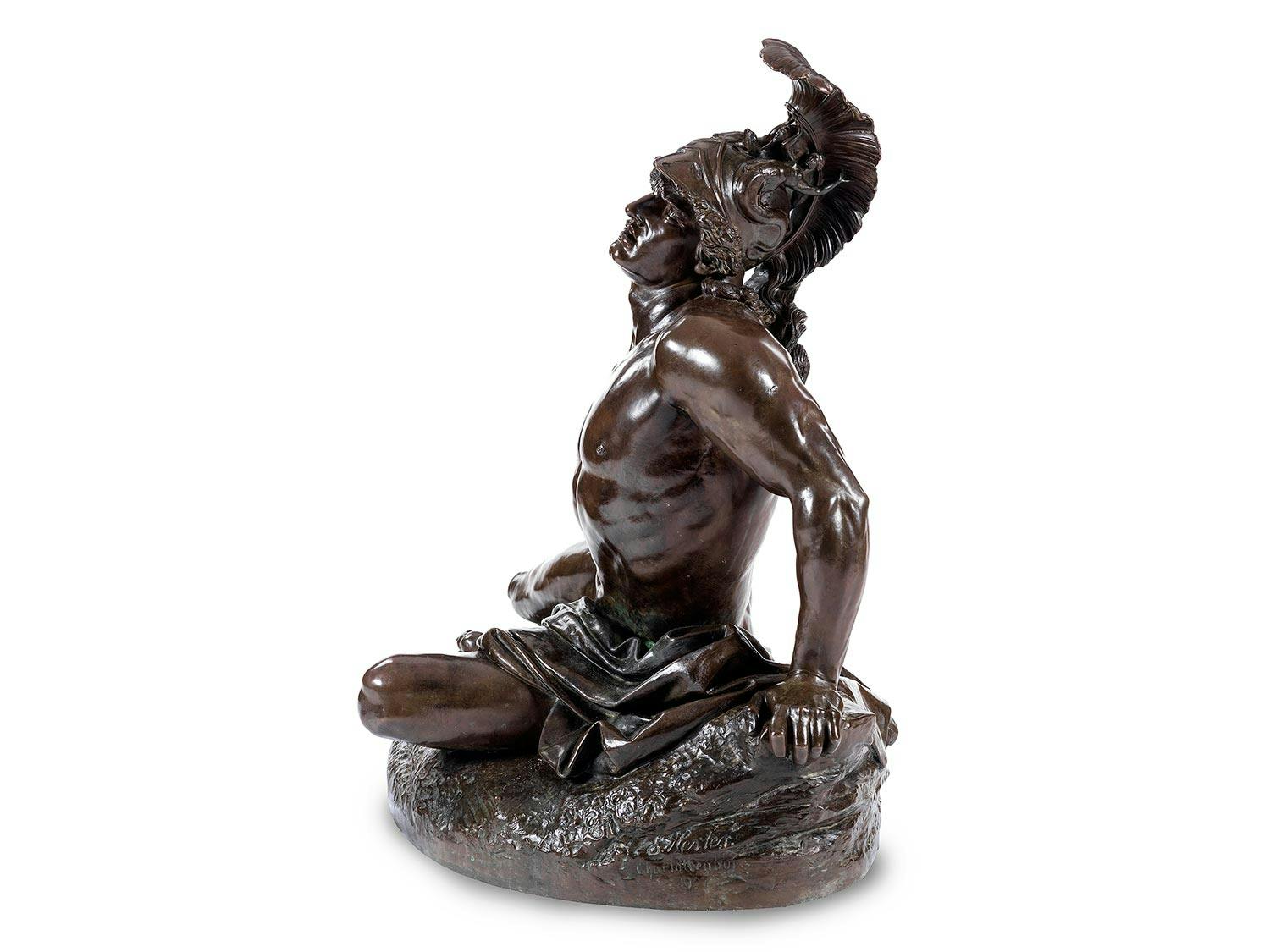
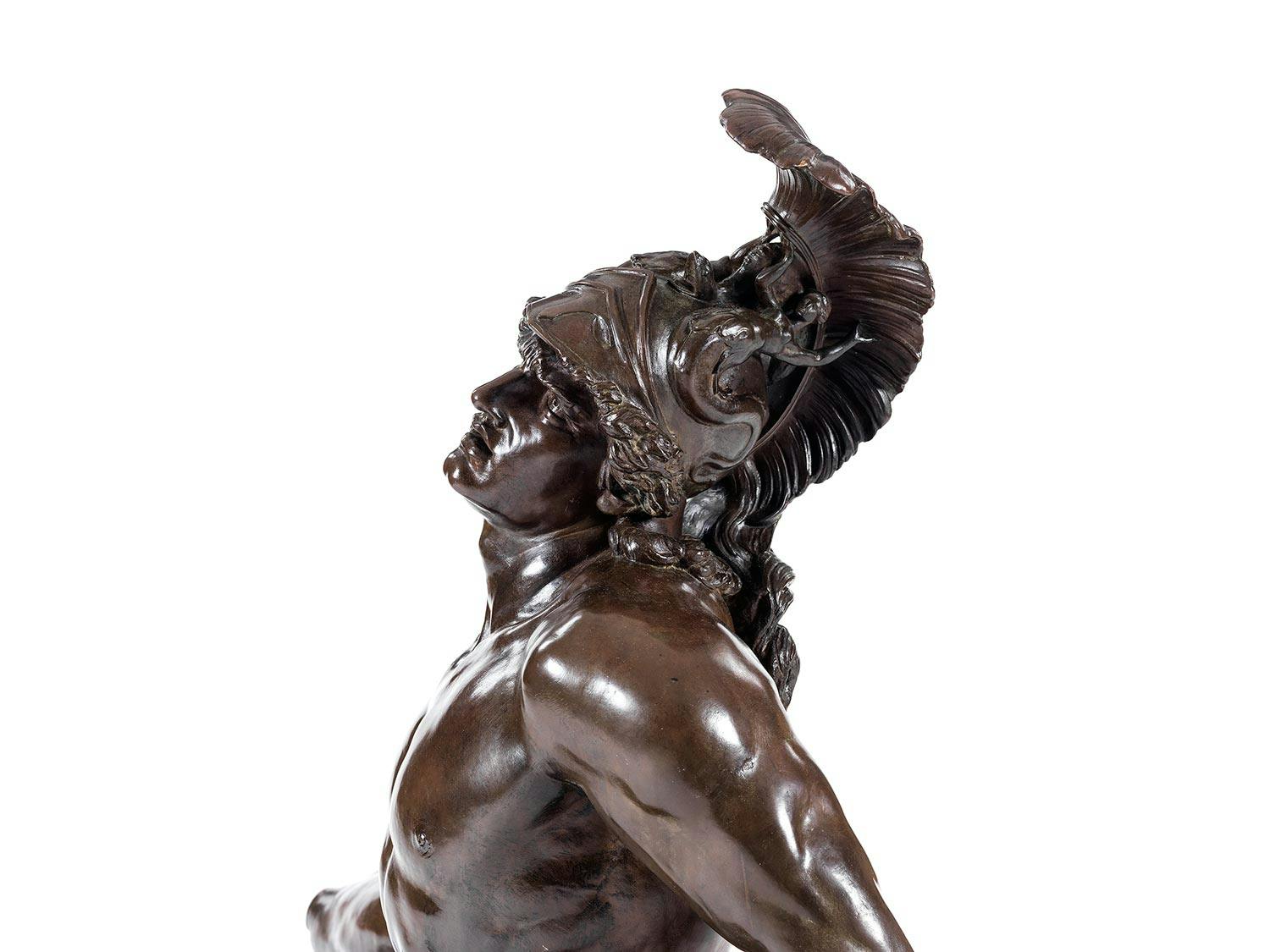
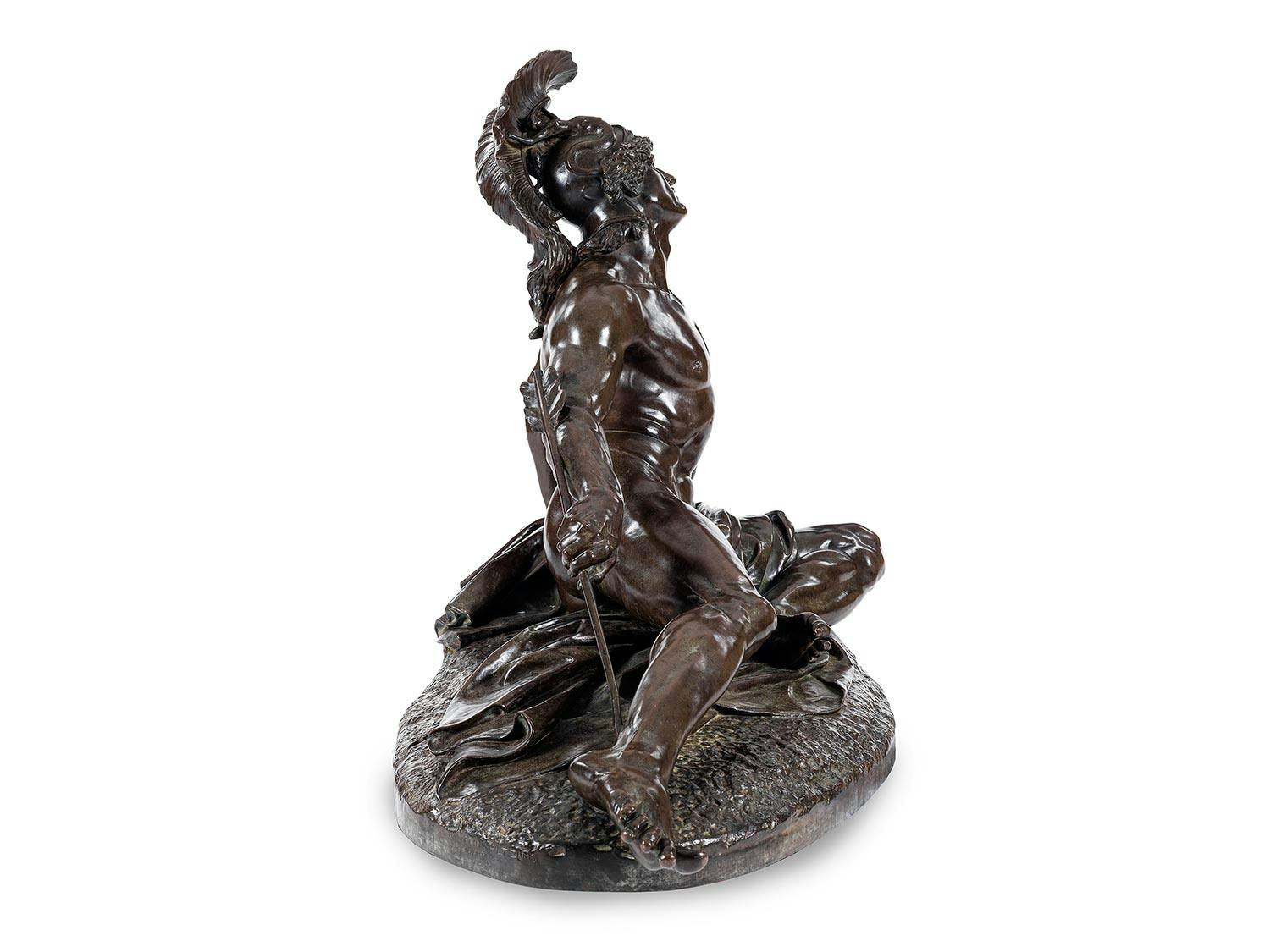
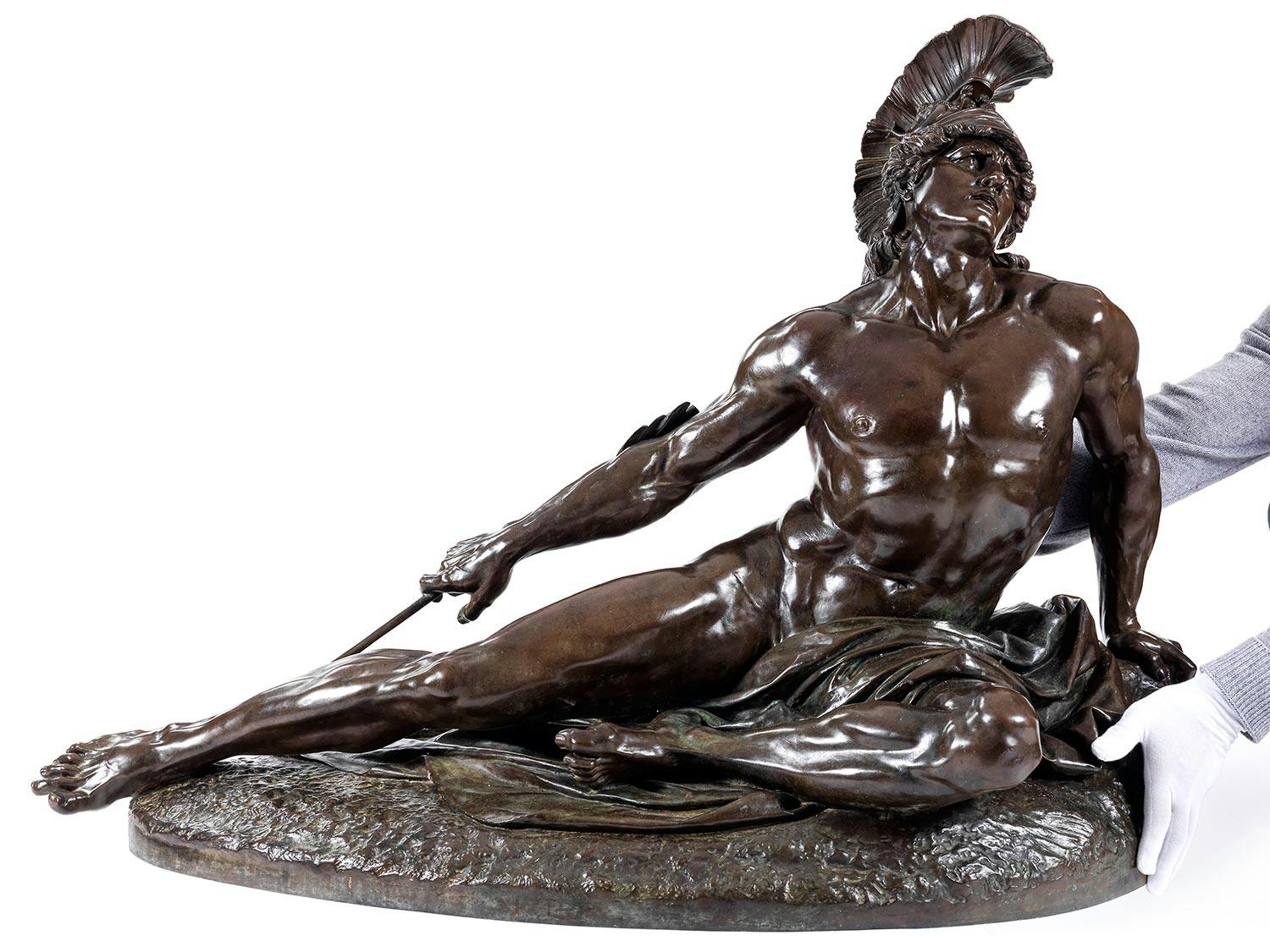
STERBENDER ACHILLHöhe: 79 cm.
Breite: 110 cm.
Tiefe: 54 cm.
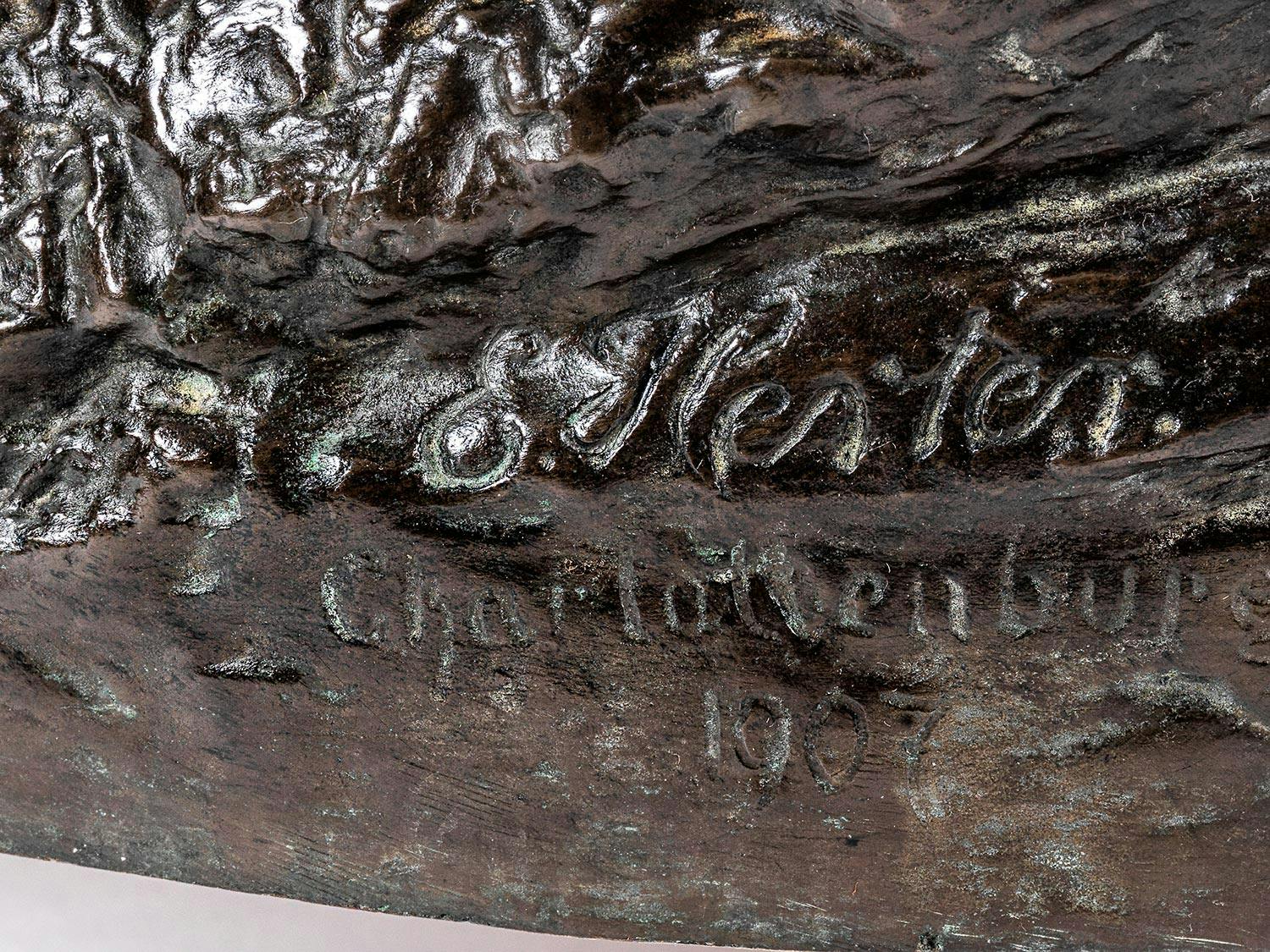
Signiert, ortsbezeichnet und datiert „E. Herter/Charlottenburg/1907“, Gießereimarke: Guss Martin & Piltzing, Berlin N.
Catalogue price € 80.000 - 120.000
Catalogue price€ 80.000 - 120.000
$ 91,199 - 136,800
£ 68,800 - 103,200
元 611,200 - 916,800
₽ 7,727,200 - 11,590,800
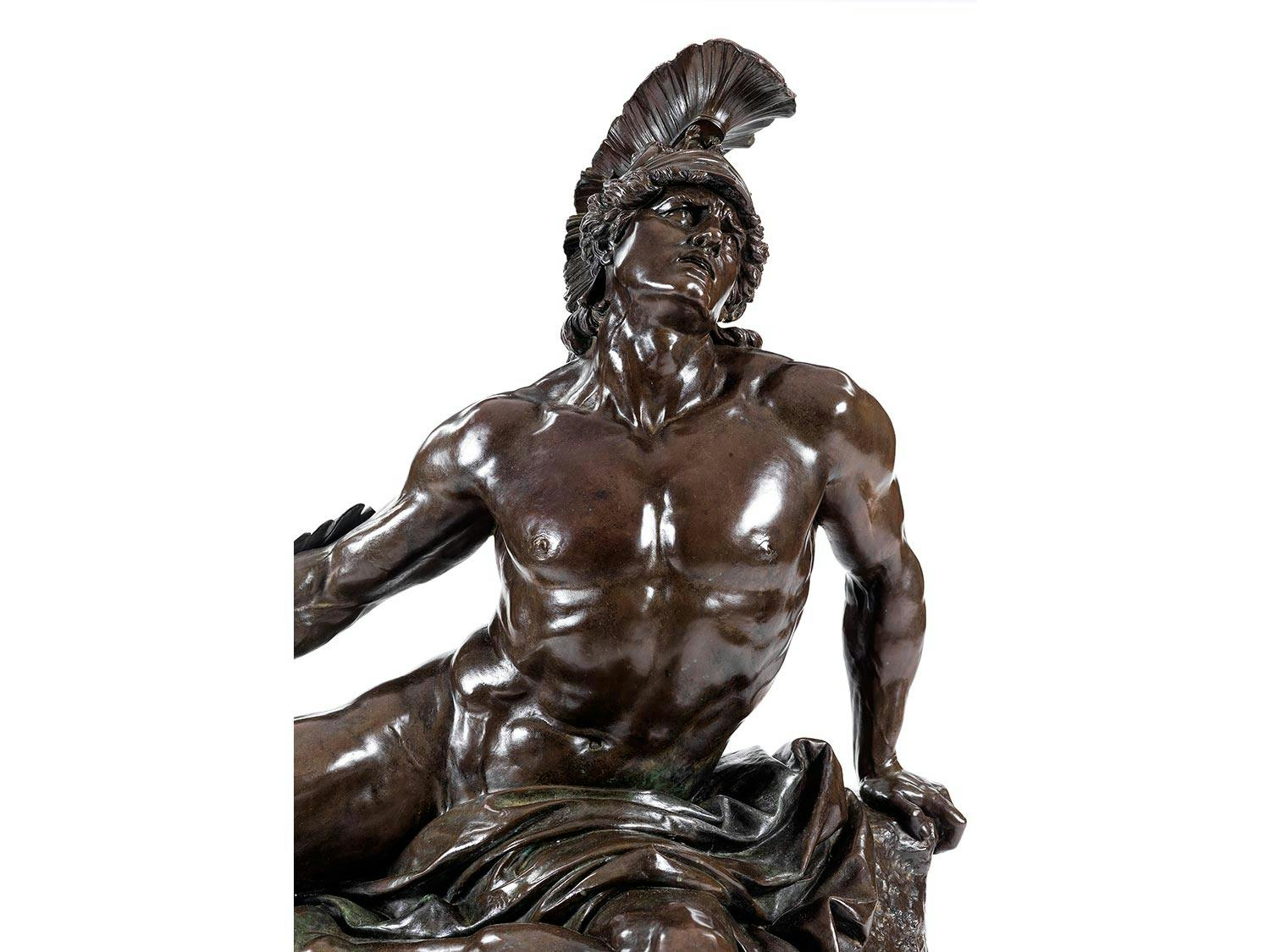
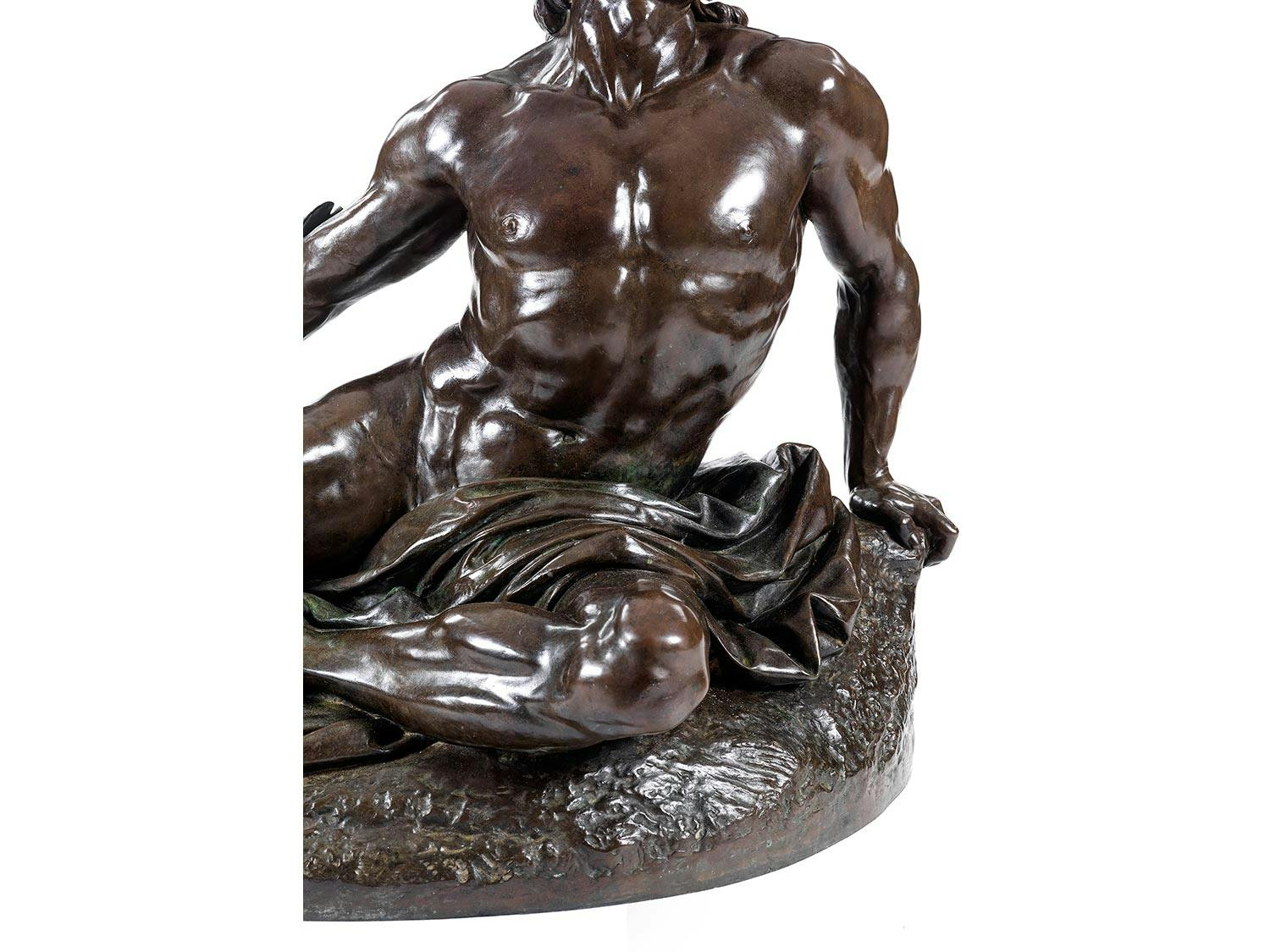
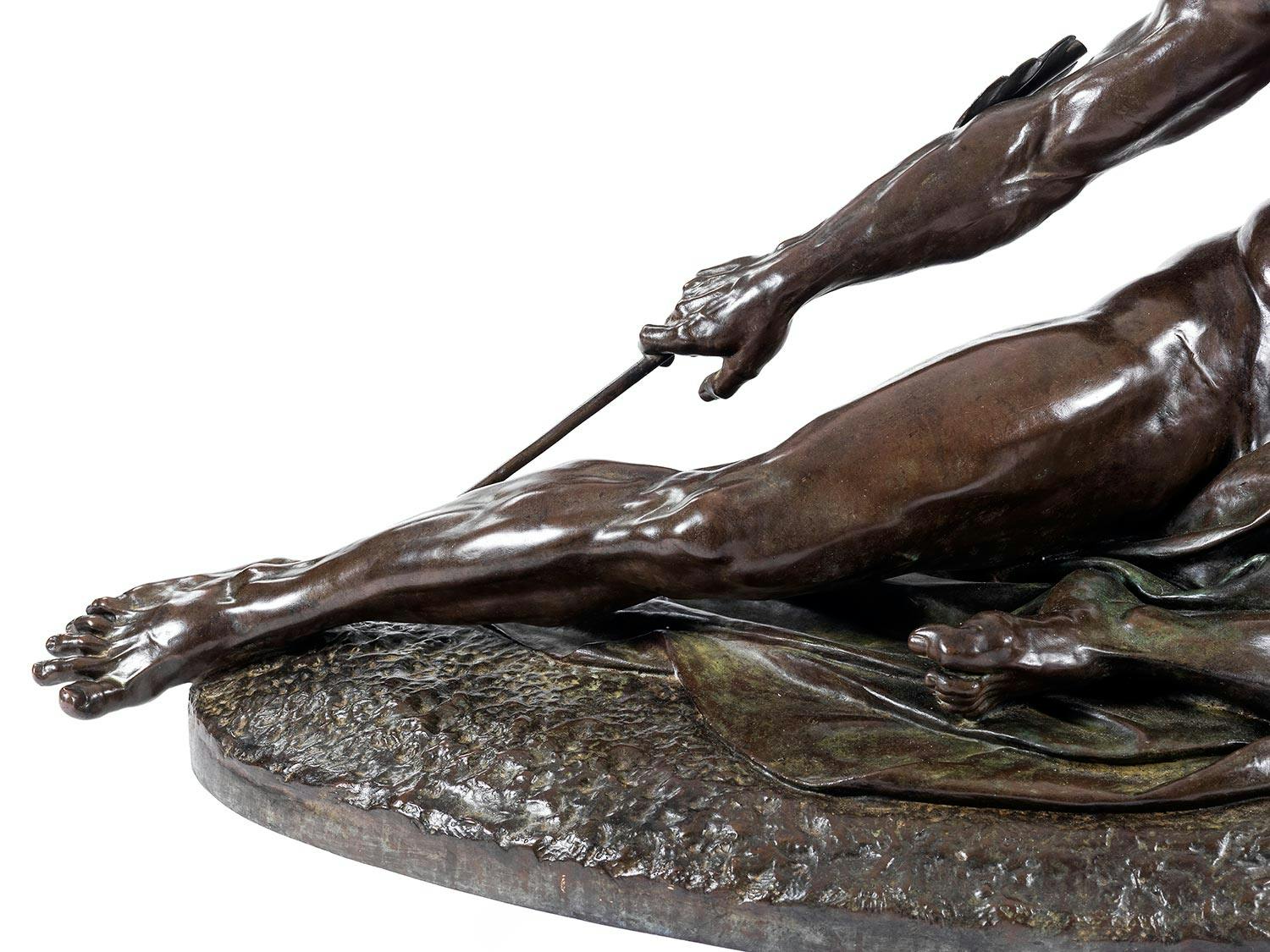
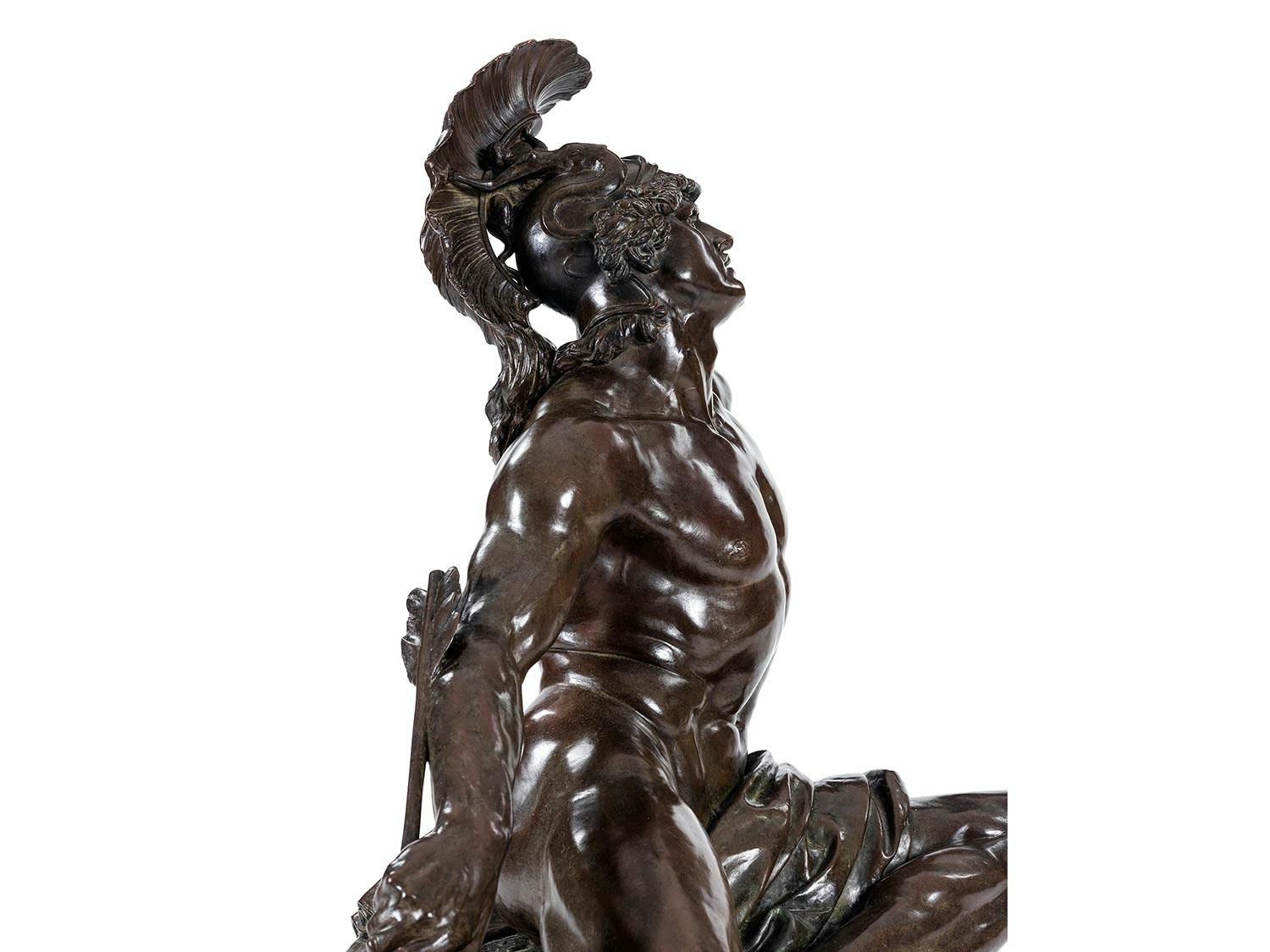
Bronze, gegossen, mittelbraun patiniert. Herters erster Erfolg war die Präsentation der „Antigone“, 1872 von Wilhelm I für das Berliner Schloss in Auftrag gegeben (heute im Schloss Bad Homburg). Dieses Ereignis eröffnete ihm den Zugang zu kaiserlichen Aufträgen, die bis in die 1900er-Jahre mit öffentlichen Denkmälern und kaiserlichen Gartenaufträgen fortgeführt wurden. 1875 vertiefte er in Italien seine Auseinandersetzung mit der klassischen Skulptur, 1890 wurde er Professor an der Académie des Beaux-Arts. Sein bekanntestes Werk, den „Achille mourant“ (Der sterbende Achill, um1884), schuf er für Elisabeth von Österreich („Sisi“) zur Gestaltung der Gärten ihrer Villa auf Korfu. Das Modell erlangte Berühmtheit und gab der Achilleion-Villa ihren Namen. Die hier angebotene Bronzeversion überträgt die monumentale Wirkung des Originals in repräsentativer Größe für den privaten Raum.
Der international bekannt gewordene Künstler war Schüler von August Fischer (1805 – 1866), Gustav Blaeser (1813 – 1874) und Albert Wolff (1814 – 1892). 1875 unternahm er eine Studienreise nach Italien und ließ sich anschließend als Akademieprofessor in Charlottenburg nieder. Zahlreiche Werke seiner Hand finden sich in Europa, unter anderem in der Nationalgalerie Berlin, vor allem auch in Österreich, mit Arbeiten für Kaiserin Elisabeth, darunter den „Hermes“ für die Hermesvilla in Wien, aber auch das Heinrich Heine-Denkmal, für Düsseldorf gearbeitet, nun in New York City aufgestellt.
Provenienz:
Prinz Georg von Griechenland und Dänemark (1869 Korfu – Saint Cloud 1957), möglicherweise als Hochzeitsgeschenk erhalten. Am 21. November 1907 heiratete Prinz Georg in Paris Marie Bonaparte, Tochter von Roland Bonaparte, Fürst von Canino und Musignano, und Marie-Félix Blanc.
Literatur:
Vgl. Peter Bloch (Hrsg.), Rheinland Westfalen und die Berliner Bildhauerschule des 19. Jahrhunderts. Berlin 1984, S. 126 – 133.
Vgl. Bernhard Maaz, Skulptur in Deutschland. Zwischen Französischer Revolution und Erstem Weltkrieg. Bd. 2, Berlin 2010, S. 544. (1461144) (13)
Ernst Gustav Herter,
1846 Berlin – 1917 Charlottenburg
DYING ACHILLES
Height: 79 cm.
Width: 110 cm.
Depth: 54 cm.
Signed, place name and dated “E. Herter/Charlottenburg/1907”. Foundry mark: Guss Martin & Piltzing, Berlin N.”
Bronze; cast with mid-brown patina. The sculptor’s most famous work is the Achille mourant (The Dying Achilles), which he created in ca. 1884 for Empress Elisabeth of Austria, also known as “Sisi”, to adorn the gardens of her villa on Corfu. Achilles was one of her favourite mythological figures. The model became so famous that it gave the Achilleion Palace its name. Here is an opportunity to acquire a bronze version of the sculpture. Executed in a representative size, it modifies the grand work from Corfu for a private residence.
Provenance:
Prince George of Greece and Denmark (1869 Corfu – Saint-Cloud 1957), possibly received as a wedding gift (he was married in Paris on 21 November 1907, to Marie Bonaparte, daughter of Roland Bonaparte, Prince of Canino and Musignano, and Marie-Félix Blanc).
Literature:
cf. Peter Bloch (ed.), Rheinland Westfalen und die Berliner Bildhauerschule des 19. Jahrhunderts, Berlin 1984, pp. 126 – 133.
cf. Bernhard Maaz, Skulptur in Deutschland. Zwischen Französischer Revolution und Erstem Weltkrieg, vol. 2, Berlin 2010, p. 544.
This object has been individually compared to the information in the Art Loss Register data bank and is not registered there as stolen or missing.
Your personal art agent
You would like to be informed of upcoming auctions if a work by Ernst Gustav Herter is offered? Activate your personal art agent here.
Please accept our privacy policy
You would like to purchase a work by Ernst Gustav Herter?
Your personal art agent Purchase in Private Sale Calendar
Our experts are happy to support you personally in your search for art objects.
You would like to sell a work by Ernst Gustav Herter?
Consign now Private Sale Service FAQ
Your consignments are always welcome.
Our staff will be happy to personally assist you every step of the way. We look forward to your call.
Get in touch with our experts
further catalogues Furniture, Interior & Clocks | Sculpture & Works of Art | Old Master Paintings – Part I | Old Master Paintings – Part II | Impressionists & Modern Art | 19th/ 20th Century Paintings | 19th/ 20th Century Sculpture | Handbags, Wristwatches & Jewellery | Living – Old Master Paintings | Living – 19th/ 20th Century Paintings | Living – Modern Art for Young Collectors | Living – Sculpture | Living – Miscellaneous | Living – Asian Art | Living – Park Decoration
